In the mid-2010s, if you told someone you didn't have a physical bank branch to visit, they’d look at you like you were storing your life savings in a digital shoebox. Fast forward to 2026, and the script has flipped. We are living in an era where "branchless" is the default for millions, and the dusty velvet ropes of traditional banks feel more like a nostalgia trip than a financial necessity.
But as the dust settles on the digital revolution, a big question remains: Is it finally time to ditch the brick-and-mortar legacy for good? Or do the "old-school" institutions still hold a secret weapon that apps can’t replicate? For many, the choice is no longer about technology—it's about the fundamental philosophy of how we interact with our own capital.
The 2026 Landscape: What Changed?
To understand the choice today, we have to look at how much the goalposts have moved. Back in 2020, online banks were mostly about high-yield savings accounts and sleek UI. Today, in 2026, the gap has narrowed, but the philosophies remain worlds apart. Traditional banks have spent billions "digitizing" their legacy systems to keep up. Meanwhile, online-only "Neobanks" have matured, moving past their "startup" phase and offering everything from mortgages to complex investment portfolios.
We aren't just choosing between an app and a building anymore; we’re choosing between two different ways of valuing our time and money. The market has bifurcated into those who value high-touch human interaction and those who value high-speed digital efficiency. With the integration of AI-driven financial advisors and instant cross-border payments, the "status quo" of 2026 looks nothing like the banking world our parents navigated.
The Case for Online Banks: Efficiency Over Everything
The biggest draw of online banking in 2026 remains the math. It’s hard to argue with a business model that doesn't have to pay for thousands of physical buildings, heating, electricity, and onsite security. These savings aren't just padding executive bonuses; in the competitive landscape of 2026, they are passed directly to the consumer in the form of aggressive rates and low fees.
1. The Interest Rate War
Even in 2026’s stabilized economy, online banks consistently offer Annual Percentage Yields (APY) that make traditional banks look like they’re stuck in 1995. While a "Big Four" bank might offer you a measly 0.05% on your savings, online competitors are frequently hitting 10 to 20 times that amount. Over a decade, that isn't just "pocket change"—it's the difference between a vacation and a staycation. For someone with $50,000 in liquid savings, the gap could mean thousands of dollars in "free" money every year just for choosing a different URL.
2. The Death of the "Nuisance Fee"
Remember "Monthly Maintenance Fees"? Or "Minimum Balance Fees"? Online banks essentially killed these. Because their overhead is so low, they don't need to nickel-and-dime you to keep the lights on. Most online banks in 2026 have moved toward a completely transparent fee structure, often including fee-free overdraft protection and international ATM reimbursements. They've gamified the experience of *saving* money rather than punishing you for *spending* it.
3. User Experience as a Priority
Traditional banks built their apps because they *had* to. Online banks built their apps because that *is* the bank. The difference in UX is palpable. From instant transaction notifications to AI-driven budgeting tools that actually predict your spending patterns, the "Human-Centric Design" of online platforms makes managing money feel less like a chore and more like a strategy game. In 2026, if you can’t freeze your card, dispute a charge, and open a secondary sub-account in under 30 seconds, your bank is failing you.

The Case for Traditional Banks: The Human Element
If online banks are so great, why hasn't Chase or Wells Fargo closed every branch yet? Because, as it turns out, when things go wrong with your life savings, you don't want to talk to a chatbot named "Finny." There are moments in life where a screen simply isn't enough, and the physical presence of an institution provides a psychological safety net that code cannot replicate.
1. The Complexity Crisis
If you are 22 and just need to deposit a paycheck and pay rent, an online bank is a no-brainer. But what happens when you’re 35, applying for a complex commercial mortgage, trying to navigate a messy inheritance, or dealing with a flagged international wire transfer? In 2026, the "Branch Advantage" is about high-level problem solving. Walking into an office, sitting across from a human being, and looking them in the eye while you resolve a crisis is a luxury that no "Help Ticket" can replace. For many, the peace of mind is worth the lower interest rate.
2. Cash is Still (Sometimes) King
Despite the rise of digital currencies and tap-to-pay, we haven't reached a 100% cashless society. If you’re a small business owner dealing with physical cash, or if you simply prefer having a safe deposit box for physical valuables, an online bank is useless to you. Traditional banks remain the only viable hubs for the physical movement of currency. The ability to walk in and get a cashier's check on the spot for a car purchase or to deposit a stack of cash from a garage sale is a utility that hasn't quite been digitized away yet.
3. A Sense of Permanence
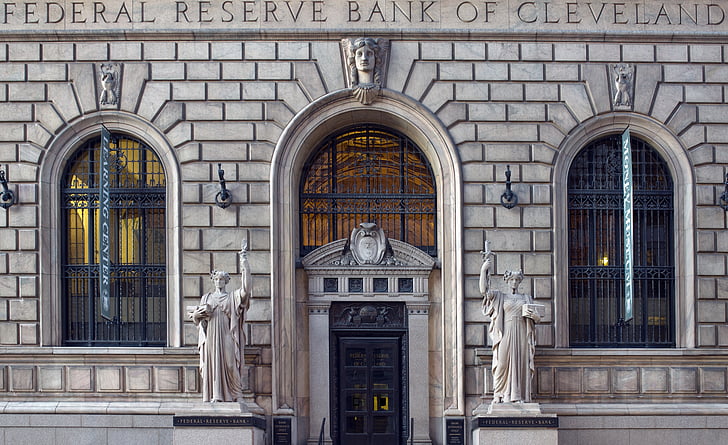
There is a psychological comfort to a building with stone pillars. While neobanks are heavily regulated and FDIC-insured (mostly), the 150-year history of a legacy bank provides a sense of "too big to fail" security that appeals to the more risk-averse saver. In an era of deepfakes and rapid technological turnover, there's something reassuring about an institution that has survived world wars, depressions, and the dawn of the internet.
The 2026 Hybrid Strategy
The most interesting trend we're seeing in 2026 isn't a mass exodus—it's the rise of the "Financial Polymath." Smart consumers are splitting their loyalty. They keep their "operating capital" in a high-tech online bank for the UI and rates, while maintaining a "Legacy Link" at a traditional bank for physical services and long-term relationship building. This allows you to have the best of both worlds without sacrificing security or growth.
Comparison at a Glance: The 2026 Reality
| Feature | Online Banks | Traditional Banks |
|---|---|---|
| Savings Interest | High (Top Tier) | Low (Legacy Rates) |
| Monthly Fees | Almost Zero | Common (unless qualified) |
| Customer Support | Chat/Email/Phone | In-person/Dedicated Manager |
| Technology | Cutting-edge/Integrated | Functional/Standard |
| Physical Services | Non-existent | Cash/Safe Boxes/Notary |
Identifying the "Switching Point"
How do you know if it's time for you to make the jump? It usually comes down to your "Financial Friction" score. Ask yourself: How often did I visit a branch in 2025? If the answer is "Zero," you are paying for a service (convenience of location) that you aren't using. Am I leaving money on the table? Take your average savings balance and multiply it by 4%. If that number is significantly higher than the interest you earned last year, you are essentially paying a "loyalty tax" to your old bank.
Why Online Wins
- Superior Interest Rates (APY)
- No "Hidden" Monthly Fees
- Better Budgeting & AI Tools
- Faster Mobile Deposit Limits
Why Traditional Holds On
- Physical Cash Handling
- Face-to-Face Problem Solving
- Safe Deposit Boxes
- Established Relationships for Loans
The Trust Factor in the Age of AI
As we navigate 2026, security has become the new frontline. Traditionalists argue that physical banks are harder to "hack" in a holistic sense. However, the irony is that online banks, born in the cloud, often have more sophisticated biometric security and real-time fraud encryption than legacy systems struggling to patch 40-year-old COBOL code. The "risk" of online banking is largely a myth at this point, provided the institution is FDIC or NCUA insured. The real risk in 2026 isn't where your money is stored, but how you manage your digital identity and two-factor authentication.
Final Verdict: Is it Time?
In 2026, the "Traditional vs. Online" debate is no longer about which is "better"—it’s about which one matches your lifestyle. If you value every penny of interest, hate fees, and do 100% of your business from your phone, a traditional bank is an anchor you don't need. However, if you find peace of mind in knowing exactly where to go if you need to speak with a manager, or if your business requires cash transactions, the branch still has a role to play.
The "Golden Mean" for 2026? The 80/20 Rule. Keep 80% of your liquid cash in a high-yield online account to let it grow, and 20% in a local traditional bank for "boots on the ground" access. Banking is no longer a marriage; it’s a series of strategic partnerships. Don't be afraid to break up with a bank that isn't serving your bottom line. After all, they’re definitely not afraid to charge you for the privilege of holding your money.

Looking for the Best Rates of 2026?
Our real-time comparison tool tracks the top-performing online and traditional banks to ensure you never miss out on interest.
Compare Bank Rates NowFinancial Disclaimer: The information provided in this article is for educational and informational purposes only and should not be construed as professional financial, investment, or legal advice. While we strive to provide accurate and up-to-date information, banking rates and terms change frequently. We recommend consulting with a certified financial advisor or conducting your own thorough research before making any significant financial decisions. CreditOmni assumes no liability for any loss or damage resulting from reliance on the information contained herein.